NAKIRI NISHIGATA 西型菜切包丁

Nishigata nakiri or “western type nakiri” has originated from Kansai region (modern Osaka area). This nakiri type has a square heel, the tip is a bit rounded and the blade profile is generally more straight than that of the eastern type nakiri. Today this nakiri type is the most commonly known nakiri. Another name for this type is “kakugata nakiri” (角型菜切包丁).
Nakiri is a double bevel knife.
Back to Japanese Knife Types Collection main page

NAKIRI HIGASHIGATA 関東型菜切包丁
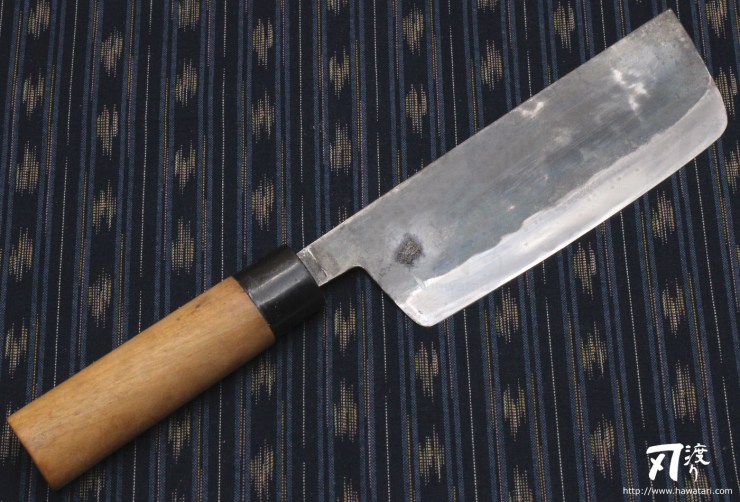
Higashigata nakiri or “eastern type nakiri” has originated from Kanto region (modern Tokyo area). This nakiri type has a different blade profile than that of Nishigata nakiri – both the tip and the heel are rounded and the edge line also has a slight curvature. The handle is also a bit shorter than the handle on Kansai style nakiri. Also known as “kantogata nakiri” (東型菜切包丁).
Nakiri is a double bevel knife.
Back to Japanese Knife Types Collection main page
HABAHIRO NAKIRI 幅広菜切包丁

Kakugata nakiri with a somewhat wider blade than the blade of the normal kakugata type (nishigata nakiri).
Nakiri is a double bevel knife.
Back to Japanese Knife Types Collection main page
KO-NAKIRI 小菜切包丁

Not a separate type, more of a curious case really. A kakugata nakiri with a very short blade. This particular specimen has a 130mm long blade, the shortest nakiri I’ve ever seen had a 120mm long blade. These kind of short nakiri knives are in any case very uncommon.
Nakiri is a double bevel knife.
NOTE: We sell similar kind of short nakiri knives in our webshop, if you are interested in owning a unique short nakiri knife, please, check out “Nakiri” section of our webshop through the link below.
Back to Japanese Knife Types Collection main page
KATABA-NAKIRI 片刃菜切包丁
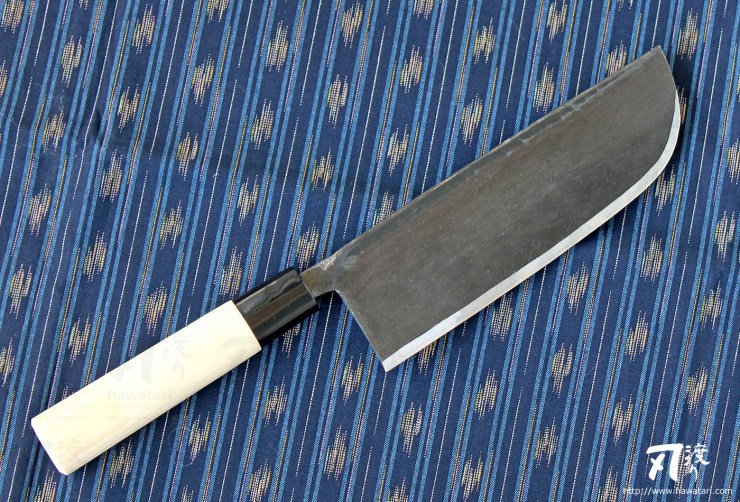
Not a separate type, more of a curious case, forged by a bladesmith from Yamagata area. A nakiri knife with asymmetric grind that resembles kireha bevel, found on single bevel knives. While the blade features this heavily asymmetric bevel, the edge is still sharpened on both sides. So, while technically the blade can be classified as a single bevel blade (kataba), the edge is created in the same manner as it is done with double bevel knives (ryoba). This specimen is non the less a very unique knife.

Back to Japanese Knife Types Collection main page
 hawatari